Chinese Electric Vehicles
The Clean Energy Investor portfolio has reached $0.5 million, mostly from money invested but also from 21% p.a. capital gains, mostly from Chinese companies. China absolutely dominates the clean energy sector and this is especially the case in electric vehicles.
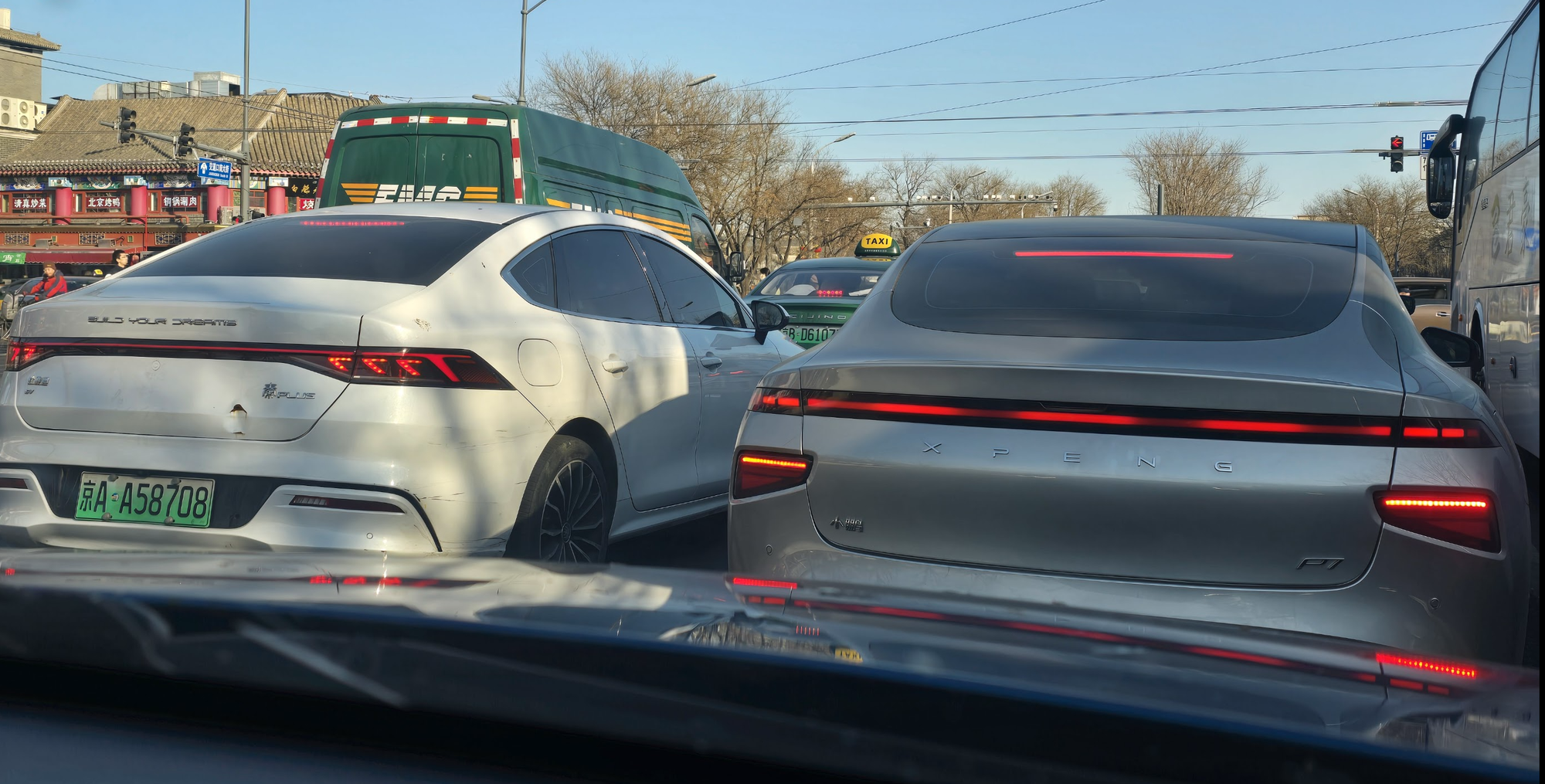
Earlier this year I visited China and got to see first hand how they have gone all-in on electric vehicles and how pleasant this was with the roads being so quiet and clean. Subsequently going to Japan and then home to Australia felt like going back in time! Every shopping mall in Beijing has a showroom from each manufacturer so it's easy to look at lots of cars inside and out. This made me super bullish on Chinese EV manufacturers so I made or topped up the following investments.
Xpeng (9868.HKG)
Xpeng Inc. (also known as XPENG) is a Chinese electric-vehicle manufacturer based in Guangzhou, founded in 2014, that positions itself as a technology-oriented mobility company with advanced driver-assistance systems, vehicle connectivity and premium features.
On the numbers front:
- In 2024 XPENG delivered about 190,068 vehicles, which was a roughly 34 % increase over 2023. Wikipedia+2SEC+2
- It reported 2024 revenue of RMB 40.87 billion and a net loss of RMB 5.79 billion, with operating income also negative (around –RMB 6.66 billion). Wikipedia+2SEC+2
- For Q2 2025 it achieved revenue of around RMB 18.27 billion (≈ US$2.55 billion), vehicle deliveries of ~103,181 units (up ~241.6 % y/y) and a net loss narrowed to RMB 480 million. Gross margin was 17.3 %, vehicle margin 14.3 %. CnEVPost+1
I bought Xpeng shares because the cars look and feel very solid. They are targeting the premium and of the market and have focused n technology as their competitive market.
Nio (9866.HKG)
NIO Inc. is a Chinese electric-vehicle (EV) manufacturer founded in 2014, headquartered in Shanghai, that emphasises high-end smart EVs with features like vehicle-to-grid, battery-swap capabilities, and connected mobility.
On the key numbers:
- In Q2 2025, NIO delivered 72,056 vehicles, an increase of ~25.6% year-on-year. www.alphaspread.com+1
- For that same quarter the company reported revenue of RMB 19,008.7 million (≈ US$2.653 billion), up ~9% from a year earlier. NIO+1
- Despite the growth, NIO remains unprofitable. Its gross profit margin in Q2 was about 10% and its vehicle margin declined to ~10.3% from ~12.2% a year earlier. www.alphaspread.com+1
- Cumulatively, by the end of 1H 2025 the firm’s losses had exceeded RMB 10.4 billion, and its cumulative losses since operations began exceed RMB 120 billion. 36Kr
I bought Nio shares because the cars were also very solid and as a bit of a hedge if battery swapping ever takes off.
Li Auto (2015.HKG)
Li Auto Inc., founded in 2015 and headquartered in Beijing, China, makes premium electric vehicles (initially focused on extended-range EVs) and positions itself as both a mobility and technology company. Wikipedia+236Kr+2
- In the second quarter of 2025 it delivered around 111,000 vehicles (≈ 111,074 units) — a modest year-on-year increase (~2.3 %) but a sequential increase from Q1. 36Kr+2CnEVPost+2
- Total revenue for that quarter was about RMB 30.2 billion (≈ US$4.2 billion), representing a ~4.5 % decline versus the same period a year earlier. GlobeNewswire+236Kr+2
- Gross profit in the quarter was roughly RMB 6.1 billion, yielding a gross margin of ~20.1 %. Vehicle margin was ~19.4 %. GlobeNewswire+1
- Net income was around RMB 1.1 billion for Q2 2025, essentially flat year-on-year (≈ -0.4 %).
I bought Li auto as the shares seemed cheap relative to their vehicle volumes and profitability. They main differentiator is 'Extended Range Electric Vehicles' which are like an EV with a small petrol generator on board to extend the range to like 1,000 km. Although I don't think this is the right solution long term, it is gaining traction in China and could be something that catches on in more established petrol vehicle markets such as the US and Australia.